· Trip I · America / Africa
Diet Coke, a Development Indicator
Glass bottle means poor, PET means roads, Diet means abundance. A theory of the world from the refrigerated shelf, devised by a man who has been drinking the stuff since 1990.
Translated from Deutsch. Read the original
When we set off from New York in mid-April, in cold, wet weather, I wasn't thinking about anything of the sort. A few weeks later it struck me for the first time. In the dry steppes of Texas, on glowing red clay soil speckled with pale, parched bunch grass, gorgeous. In stony New Mexico. In the parched valleys of Nevada, with California's tall, rocky mountains on the horizon. In the deserts of Mexico the hunch turned into a suspicion, and in the mostly deserted, always run-down, shabby fishing villages on the Pacific coast it became a certainty: fresh water is life.
It's no longer enough to mine salt or other minerals. It's no longer enough to own endless stretches of fertile land. It's no longer enough to struggle through fished-out coastal waters in a little fishing boat. (Which reminds me that whoever decided Zurich's main station needed not one but two branches of "Nordsee" deserves to be breaded, deep-fried and half thrown away.) It's no longer enough to clear forest for fuel. Today's technology makes deserts bloom, coaxes more and more nutrients out of the same field, and turns woodland into homes and offices for ever more thirsty people. Provided you have water. The foundation of all life is clean drinking water. A truism, but apparently a Swiss has to ride a few thousand kilometres through the desert before he realises it's true.
Our journey takes us through countless countries and cultures, and they all have one thing in common: the pursuit of greater prosperity. For society, or for oneself. How can I tell how far a nation has already got on its way to the land of milk and honey? I have my set of the Fischer Weltalmanach neither with me nor in my head. With internet access there would be the CIA's annual Factbook, free to download, tons of country information, much like its German-language counterpart. On the road and offline, all I have is my own sensorium. So I put it to work. And discovered quite a few things.
Coca-Cola is available in the remotest corner of this world. Not always ice-cold, but astonishingly often. As a yardstick, then, useless, were it not for the bottle. I've often wondered, and have yet to find an answer, why fizzy drinks are still sold in glass bottles in precisely the poor countries where roads are bad or nonexistent. No PET. Cola in PET is therefore level one, and suggests infrastructure.
Level two: Diet Coke. Only a society that produces a surplus wastes a thought on saving calories or sugar so that it can consume more of something else. Light products are a clear sign of prosperity, and because Coca-Cola maintains a flawless distribution network, the company is always first on the scene when people change their thinking.
Level three: gyms in the big cities. If they exist, then some of the people evidently feel confident that the excess isn't an emergency ration for leaner times but an unsightly side dish.
The range of products mirrors regional welfare. And as a traveller I notice, in plentiful company, that I like it best where "they have everything", meaning the familiar, "mega cheap". The eyes light up of those who tell of "such a huge buffet for just two dollars". "A lot for a little" is the catchword of mass tourism, because a lot times a little is enough for whole villages that market themselves cleverly. Something has to fire the starting gun. Either you create an attraction, and the products arrive with the tourists. Or you bring in the products and offer what most tourists are after: a piece of home abroad. Before anyone points a finger here: I'm riding around the world to see the unfamiliar, and I recognise every country first by what it has in common with home. I suppose you'd call that research with home advantage.
Jasmin and I think we've found another indicator. In regions developed by Western standards, men set the tone of working life; in the catching-up regions, it's the women. They run the market, the shop, the fields and, on the side, an entire household. The men, meanwhile, leave a lasting impression: in the form of a tab at the village pub.
Clothes reveal little about individual wealth. Shoes reveal a lot. Does the person have any at all? What kind? Plastic or leather, worn out or well kept, suited to climate and terrain or simply the only pair? In Latin America the backpackers sometimes shuffle through the alleys looking the scruffiest, waistband practically at their knees, but the shoes never lie, even with them.
Mobile phones, on the other hand, are no indicator at all. Whether at four thousand metres in the Andes or in a straw-hut settlement in Zambia: it beeps polyphonically, and the latest handsets from the well-known brands are transforming the lifestyle of all peoples.
A society's behaviour also tells you a good deal. How clean it is, I notice even in passing through. We all produce rubbish; the question is how we deal with it. In Chile every rest area is strewn with broken glass. At least they have rest areas. In Peru there are signs in places forbidding the burning of tyres. Is it allowed everywhere else?
Then there are less obvious features: air quality, or the way people treat one another. Queueing at a counter can be a tight, jostling affair (Kenya), provided you get served at all (Chile). The level of education is also a reliable indicator, but I've mentioned that several times in earlier texts.
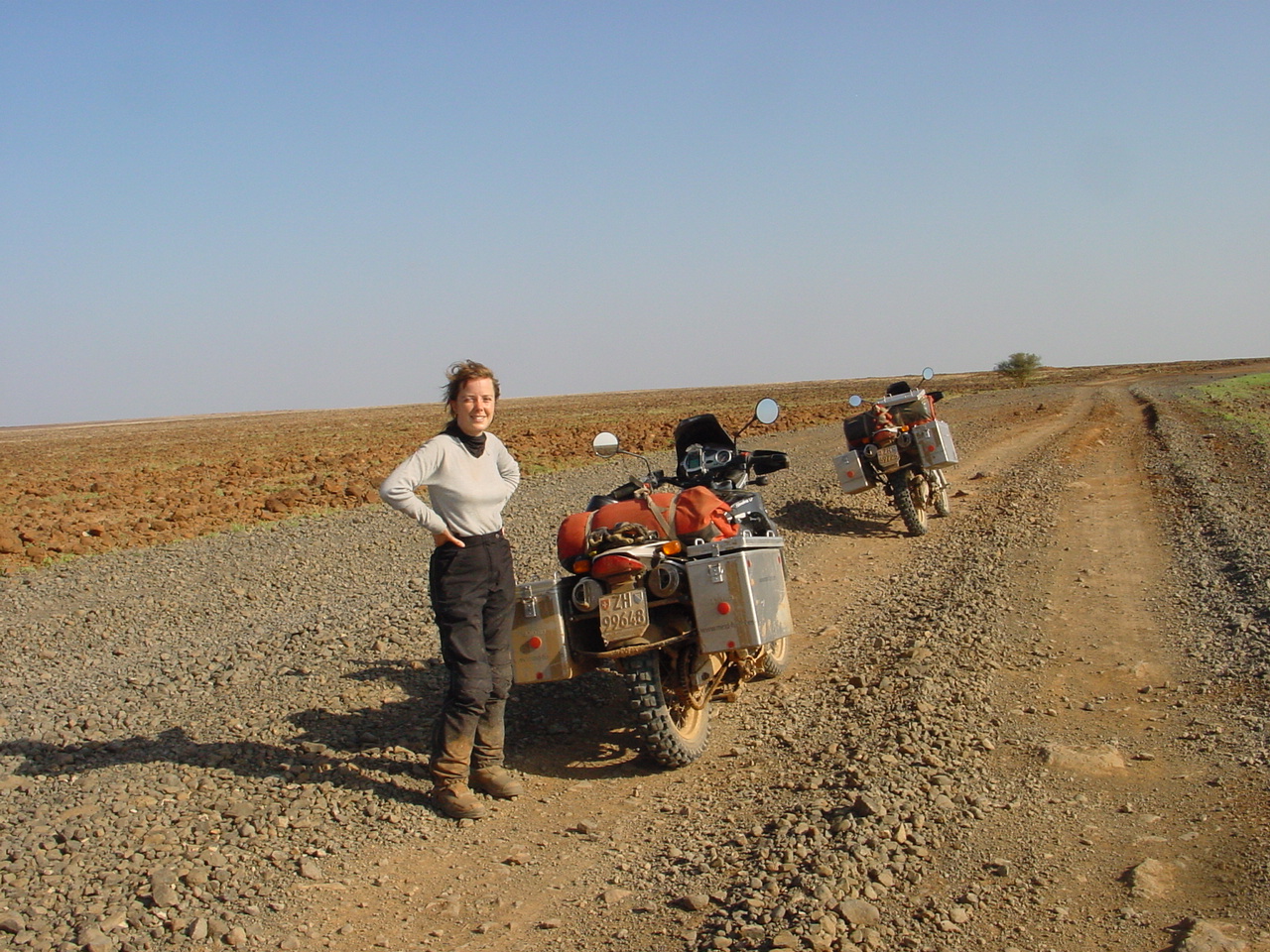
In Africa we're a long way from Diet Coke. (No joke: right now I'm sitting at a campsite in Isiolo, waiting for better weather, and on the meadow next door adults decked out in feathers are singing and dancing.) This is glass-bottle country, and in Nairobi I saw a fitness centre for the first time in ages. Every day brings something new here, and I'm looking forward to it, even if it's only to the road to Marsabit finally being dry again. What makes me uneasy is a people that begs for a Western lifestyle, sells itself for it, and fails to notice that having rights also means fulfilling duties.
And how did I come to Diet Coke of all things? Summer 1990, Interrailing through southern Europe with my sister. "Either Diet Coke, or you're not thirsty," she said, the best of all sisters. I've been drinking the stuff ever since and can tell you exactly where to get it. My entire development theory, then, rests on one sentence from my sister and on an addiction. Most theories have worse foundations. Cheers.
km on the road · Day 240